
Lateral thinking riddles aren’t hard because the answer is complicated. The answer is almost always simple. They’re hard because the question leads you to make an assumption — and you don’t notice you’ve made it.
So here’s a tip before you start. When you’re stuck, stop hunting for the answer and ask yourself a different question: what have I assumed that the riddle never actually said?
The riddles
- A man pushes his car to a hotel and immediately knows he’s bankrupt. Why?
- Two fathers and two sons go fishing. They catch three fish, and each of them takes home exactly one. How?
- A man lives on the tenth floor. Every morning he takes the lift down to the ground floor. Coming home, he rides the lift to the seventh floor and walks up the last three flights — unless it’s raining, or someone else is in the lift. Why?
- What gets wetter the more it dries?
- A boy and his father are in a car accident. The father is fine; the boy is rushed to hospital. The surgeon looks at him and says, “I can’t operate on this boy — he’s my son.” How is that possible?
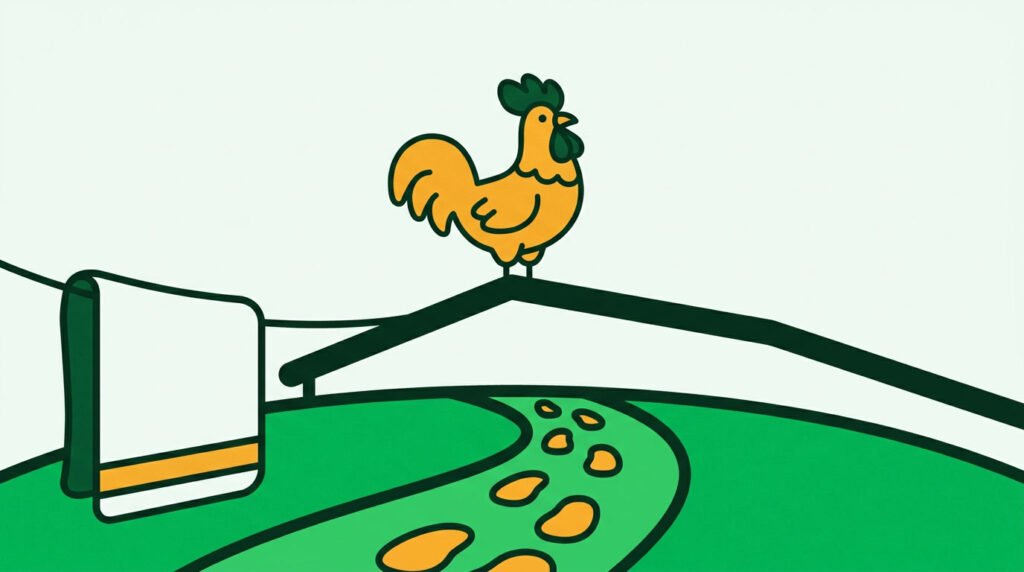
- A rooster lays an egg on the very top of a sloping roof. Which side does it roll down?
- The more of these you take, the more you leave behind. What are they?
- How many months of the year have 28 days?
- What can you hold in your right hand but never in your left?
- A woman gives birth to two sons on the same day, in the same year. They’re not twins. How?
The answers
1. He’s playing Monopoly
He’s landed on a property with a hotel on it, and he can’t afford the rent. The assumption: that the car and the hotel are real.
2. There are only three people
A grandfather, his son and his grandson. The middle one is both a father and a son, so three people cover “two fathers and two sons”. The assumption: that each label means a different person.
3. He’s too short to reach the higher buttons
He can reach the button for the seventh floor, but not the tenth. When it’s raining he has an umbrella to press it with, and when someone else is in the lift, he asks them. The assumption: that the answer is about the building, the lift or his fitness, rather than about him.
4. A towel
The more it dries you, the wetter it gets. The assumption: that “dries” means the thing itself is drying.
5. The surgeon is his mother
Or his other father. Either works. The assumption: that a surgeon is a man, which the riddle never said. It’s one of the best-known riddles precisely because so many people get stuck on it.
6. Neither side
Roosters don’t lay eggs. The assumption: that the setup is possible, so the only question is geometry. Riddles like this steer your attention to the wrong detail on purpose.
7. Footsteps
Every step you take leaves one behind. The assumption: that “take” means taking something away.
8. All twelve
Every month has at least 28 days; only February stops there (in most years). The assumption: that the question means “exactly 28”.
9. Your left elbow
Try it. Your left hand can’t hold your left elbow, but your right hand can. The assumption: that the answer is an object, rather than part of you.
10. They’re two of a set of triplets
Or quadruplets. Nothing in the riddle says she only had two children that day. The assumption: that “two sons born together” means “twins”.
Why these work
In every one of these, your brain fills a gap with the most likely detail — a real car, four different people, a male surgeon, exactly 28 days — and then treats that guess as a fact. That’s normally a useful shortcut. It’s how you read a sentence without checking every word.
Riddles simply exploit it. The skill they train is noticing the gap-filling as it happens, and asking whether the question really said what you think it said. That turns out to be useful well beyond riddles.
How many did you get? Most people solve the towel straight away — and get stuck on the lift.